Why You Shouldn’t Hire from LinkedIn (or Any Job Board) in 2026
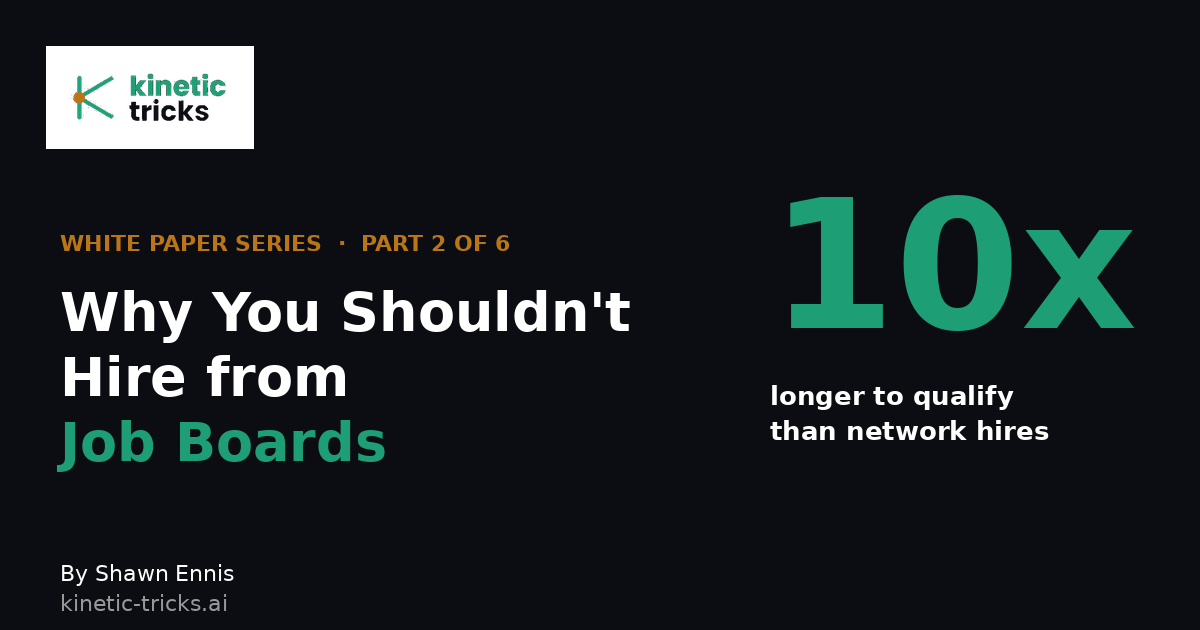
In my 25 years of building and selling companies, I have found that job-board candidates take 10 times longer to qualify than network candidates. The math isn’t even close. Here’s why — and what to do instead.
By Shawn Ennis · Founder & CEO, Kinetic Tricks · June 17, 2026
Let me say this plainly, because most hiring content tip-toes around it:
If you are hiring sales or marketing talent from LinkedIn, Monster, Indeed, ZipRecruiter, or any other public job board — you have already lost.
I don’t mean the people on those boards are bad. Some are excellent. I mean the act of hiring from those boards is, by itself, evidence that something in your business has gone wrong.
10x longer to qualify a job-board candidate vs. a network candidate
The three reasons people are on job boards
Job boards select for people who are actively looking for work. There are exactly three reasons a senior salesperson or marketer is actively looking:
- They’ve been laid off. They may be excellent. They may also be the underperformer who got cut first. You won’t know until they’ve already cost you six months.
- They’re miserable at their current job. People who are great at their job and respected by their team and on track for promotion are not on Indeed. The people on Indeed are unhappy. Unhappiness travels with them. It will arrive at your company within ninety days.
- They’ve been job-hopping every 18-24 months for a decade. They are professional candidates. They are excellent at interviews, which is a different skill from being excellent at the job. By the time you realize the difference, you’ve paid them for a year.
The people you actually want — the senior closer at the Tier 1 customer who would be perfect as your VP Sales, the marketing director at your former employer who built the campaigns you admire, the partner manager at your competitor who knows your entire market — these people are not on job boards. They are at companies. They will move for the right opportunity from someone they trust. They will not respond to a generic LinkedIn job post from a founder they don’t know.
What you’re declaring when you post a job
When a founder turns to job boards, they’re publicly declaring three things:
- “I don’t have a network strong enough to find this hire.”
- “I haven’t been cultivating relationships with the people I’d actually want to hire.”
- “I’m out of time and willing to hire whoever is available.”
Each of those is a problem. Together they explain why job-board hires fail at twice the rate of network hires.
The narrow exception
If you have 40% gross margins and patient customers who tolerate ramp time, you might be able to absorb the cost of a bad hire while you find a better one. In twenty-five years of GTM, I have never seen those conditions in an early-stage company. Margins are tight. Customers are impatient. Bad hires compound.
The only people who can afford to hire from job boards are people who can afford to hire badly. Most founders cannot.
The hundred-hours rule
Here’s the rule I follow, and the one I recommend to every founder I advise:
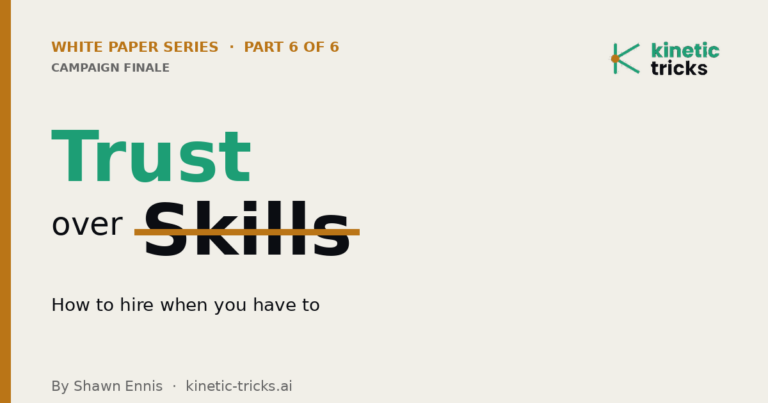
The first five to ten hires you make — your core team — should come from people you have had hundreds of hours of contact with.
Not “I’ve met them at a conference” hours. Hundreds of hours of meaningful interaction: working on deals together, supporting the same customers, navigating partnerships, debating ideas, sitting in long meetings, getting drinks after the meetings. The interactions that show you who someone actually is.
If you haven’t had hundreds of hours with someone, you don’t know them well enough to hire them as part of your founding team. This is non-negotiable for the first five to ten hires.
After that — once your company has its own gravity and the cultural foundation is set — you can start hiring people with less prior context, because the existing team becomes the shock absorber for mismatches.
But the first five to ten hires? They are the company. Hire only people you know deeply.
Where to actually find your next hire
Your network is bigger than you think. Look in four places:
Former customers. People who bought from you at a previous company already know your industry, your sales motion, and your style. Some of them are looking for their next move. Most haven’t told you. Ask.
Former partners. The integration partner, channel partner, or referral partner you worked closely with at a previous company knows how you operate. The senior people at those partners are often more entrepreneurial than they let on.
Former competitors. The person who almost beat you in a deal three years ago has skills you respect. They’re also a degree of separation away — close enough to be reachable, distant enough that hiring them isn’t poaching from a friend.
Former colleagues. People you’ve worked alongside at past companies. The ones who left for other roles. The ones who are at their next company now and considering their move after.
Build the list before you need to hire. Have coffee with the names on the list throughout the year. When you need to hire, you’re not starting from zero — you’re activating relationships you’ve been maintaining.
What this means for your time today
If you’re 18 months out from your first hire, the time to invest in your network is now. Not when you need it. Now.
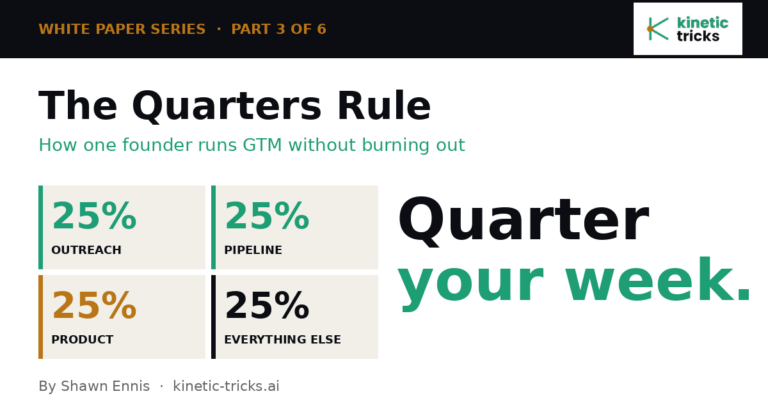
Spend 25% of your week on networking. Reach out to one or two former colleagues per week. Take coffee meetings. Maintain LinkedIn relationships actively, not passively. Be the founder people in your network think of when they hear about a job opportunity.
The math is simple: founders who network well in year one make great hires in year three. Founders who don’t network end up on Indeed in year three. The investment is small. The compounding is enormous.
Want the rest of the framework?
Job boards versus network is one piece. The full framework — including when to hire, who to hire, what runway you need, and the three mechanisms that replace your first sales hire — is in the white paper.
Get the full framework: Avoiding the Hiring Trap
A 31-page framework for solo founders deciding when AI agents are enough and when humans are essential. Free download. No spam. Download the white paper →